

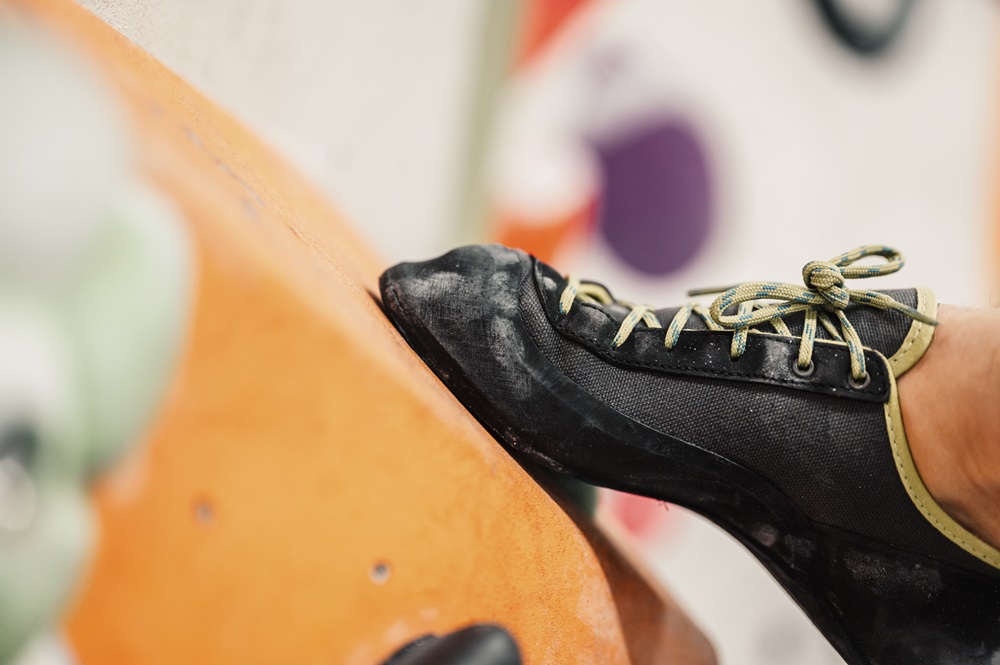
Walk into any climbing gym and you’ll see people grimacing as they jam their feet into painfully small shoes. Others wear shoes that look almost normal.
Who’s doing it right? The answer depends on what you’re climbing and for how long. Choosing between tight men’s bouldering shoes and comfortable ones isn’t about toughness—it’s about matching your footwear to your actual climbing goals.
What Does Downsizing Actually Mean?
Downsizing means buying climbing shoes smaller than your street shoe size. Most climbers go down anywhere from half a size to two full sizes.
The idea is simple: a tighter shoe gives you more precision. When there’s no empty space inside, you can feel exactly where your toe is on tiny footholds. The shoe becomes an extension of your foot instead of just a covering.
But there’s a limit to how much this helps. Go too small and you can’t stand on your toes properly. Your foot cramps up. You lose the ability to generate power through your legs.
Here’s what different levels of downsizing feel like:
| Downsize Amount | Fit Description | Best For |
| 0-0.5 sizes | Snug but not painful, toes slightly curved | All-day climbing, beginners, long routes |
| 0.5-1.5 sizes | Tight, toes curled, uncomfortable after 20-30 min | Performance bouldering, hard sport routes |
| 1.5-2+ sizes | Very tight, toes severely curled, painful immediately | Elite climbers on limit problems only |
When Tight Shoes Actually Help Your Climbing?
You benefit from downsized shoes in specific situations.
On tiny footholds, a tight shoe gives you better feedback. You can place your toe precisely on a dime-sized edge because there’s no dead space between your foot and the rubber.
Professional climbers often downsize aggressively for competitions where every route gets climbed in under 10 minutes.
For overhang problems, tight shoes help you hook your toes on holds above your head. The curved shape of a downsized shoe naturally creates the hook position your foot needs.
During powerful moves, you want your foot locked in place. If your shoe is too roomy, your heel can slip or your toes can slide around inside. That instability costs you power when you’re trying to push off a hold.
But here’s the catch: these benefits only matter if you’re climbing at a high enough level to actually need them.
If you’re working on V0-V3 problems, the limiting factor isn’t your shoe fit. It’s technique, strength, and experience.
The Real Cost of Too-Tight Shoes
Painful shoes don’t just hurt—they make you climb worse.
When your feet hurt, you rush through problems. You don’t take time to find the best foot placement. You can’t focus on body position because you’re thinking about when you can take the shoes off.
Research on climbing injuries shows that poorly fitted shoes contribute to toe deformities, nerve compression, and chronic foot pain.
Climbers who consistently wear shoes that are too small develop bunions and hammertoes at higher rates than the general population.
And performance suffers too. A study published in the European Journal of Sport Science found that climbers performed worse on endurance problems when wearing shoes downsized more than one full size.
The discomfort reduced their ability to maintain good technique over multiple attempts.
You also can’t train effectively in painful shoes. If you can only wear them for 20 minutes before you need a break, you’re spending more time resting than climbing. That cuts into your actual practice time.
What Type of Climbing Are You Actually Doing?
Be honest about your climbing sessions.
If you’re at the gym for two hours working on technique, trying different problems, and chatting with friends, you need comfortable shoes. You’re not sending your project in the first five minutes. You’re learning and building mileage.
Comfort-first approach works best for:
- Gym sessions longer than an hour
- Working technique and movement patterns
- Building endurance and volume
- Climbing grades below your limit
- Warming up and cooling down
Performance downsizing makes sense for:
- Projecting your absolute hardest problems
- Competition climbing
- Outdoor bouldering on specific hard problems
- Short, intense sessions focused on one route
Many experienced climbers own multiple pairs. Comfortable shoes for regular training. Tight shoes for when they’re trying something at their limit.
How Men’s Feet Affect Sizing Choices?
Men typically have wider forefeet and narrower heels compared to women. This affects how shoes fit and how much you can or should downsize.
If you have wide feet and try to downsize aggressively, you’re compressing the width of your foot even more than the length.
This creates pressure points on the sides of your big toe and pinky toe. The pain becomes unbearable quickly and you’ll develop calluses or blisters.
Climbers with wide feet often get better results from choosing shoes designed with wider lasts (the foot-shaped form shoes are built around) rather than downsizing narrow shoes. You get the snug fit without the crushing side pressure.
Narrow feet have the opposite problem. You might need to downsize more just to eliminate empty space in the shoe. But that doesn’t mean you should automatically go smaller—it means you should look for shoes built on narrower lasts.
The Break-In Period Changes Everything
New climbing shoes are stiff. Leather shoes will stretch up to a full size. Synthetic materials stretch less—maybe half a size at most.
This is where people make mistakes. They buy synthetic shoes that feel painful in the store, thinking they’ll stretch. The shoes never get comfortable because synthetic doesn’t give much.
Or they buy leather shoes that fit perfectly in the store. After three sessions, the shoes have stretched so much that their foot slides around inside.
You need to account for this when you’re deciding on size. If you’re buying leather, you can go tighter initially. If you’re buying synthetic, what you feel in the store is basically what you’ll have long-term.
What Actually Works for Most Climbers
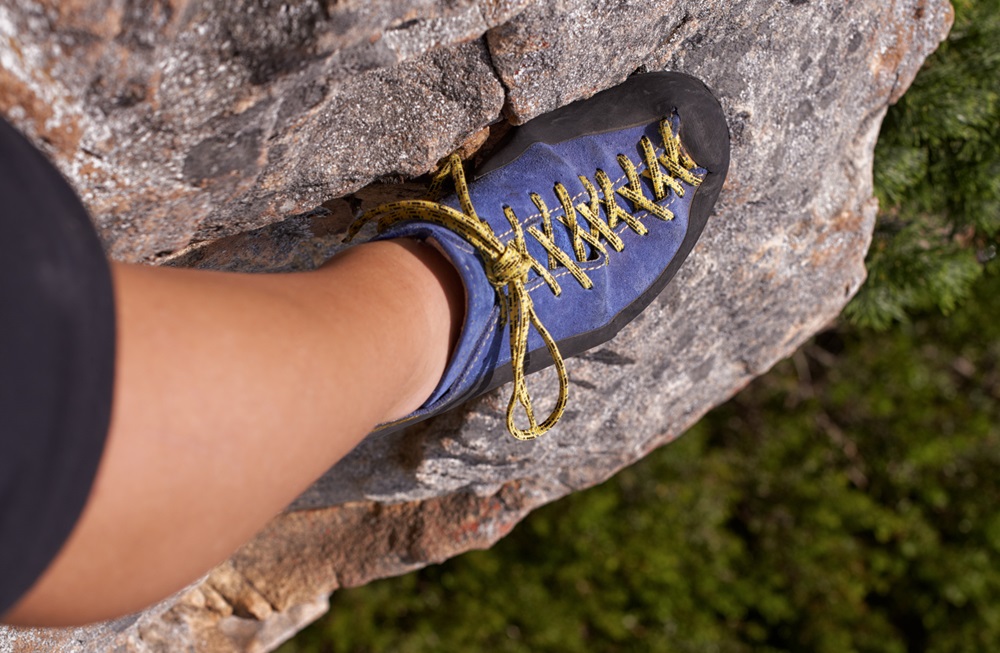
Here’s the practical advice: if you climb up to three times per week for 1-2 hours per session, you need comfortable shoes.
Your climbing will improve faster with shoes you can wear for your entire session. You’ll build better technique. You’ll try more problems. You’ll learn more.
Save the tight shoes for later. Maybe in a year or two when you’re climbing V5+ or working on your first outdoor project. At that point, you’ll have the experience to know exactly what type of fit helps your specific climbing style.
And when you do decide to downsize for performance, start conservative. Go half a size down from comfortable. See how that feels over several sessions. You can always go smaller later, but you can’t un-deform your toes.
The best men’s bouldering shoes for you right now are the ones you’ll actually wear for full training sessions. Not the ones that look cool sitting next to the wall while your feet recover.
Frequently Asked Questions
Should men always downsize bouldering shoes for better performance?
Answer: No. Downsizing only helps for short, high-difficulty climbs. For regular training sessions, comfortable men’s bouldering shoes improve performance and learning.
How much should men downsize bouldering shoes?
Answer: Most climbers downsize between 0 and 1 size. More aggressive downsizing (1.5–2+ sizes) is only useful for elite climbers on limit problems.
Do tighter men’s bouldering shoes help beginners climb better?
Answer: No. Beginners improve faster with comfortable shoes because technique, strength, and practice matter more than ultra-tight fit at lower grades.
What problems can come from wearing bouldering shoes that are too tight?
Answer: Shoes that are too tight can cause foot pain, bunions, nerve issues, and worse endurance, making long training sessions less effective.
Should men own more than one pair of bouldering shoes?
Answer: Yes. Many climbers use comfortable shoes for training and a tighter pair of men’s bouldering shoes for projecting hard problems.

