
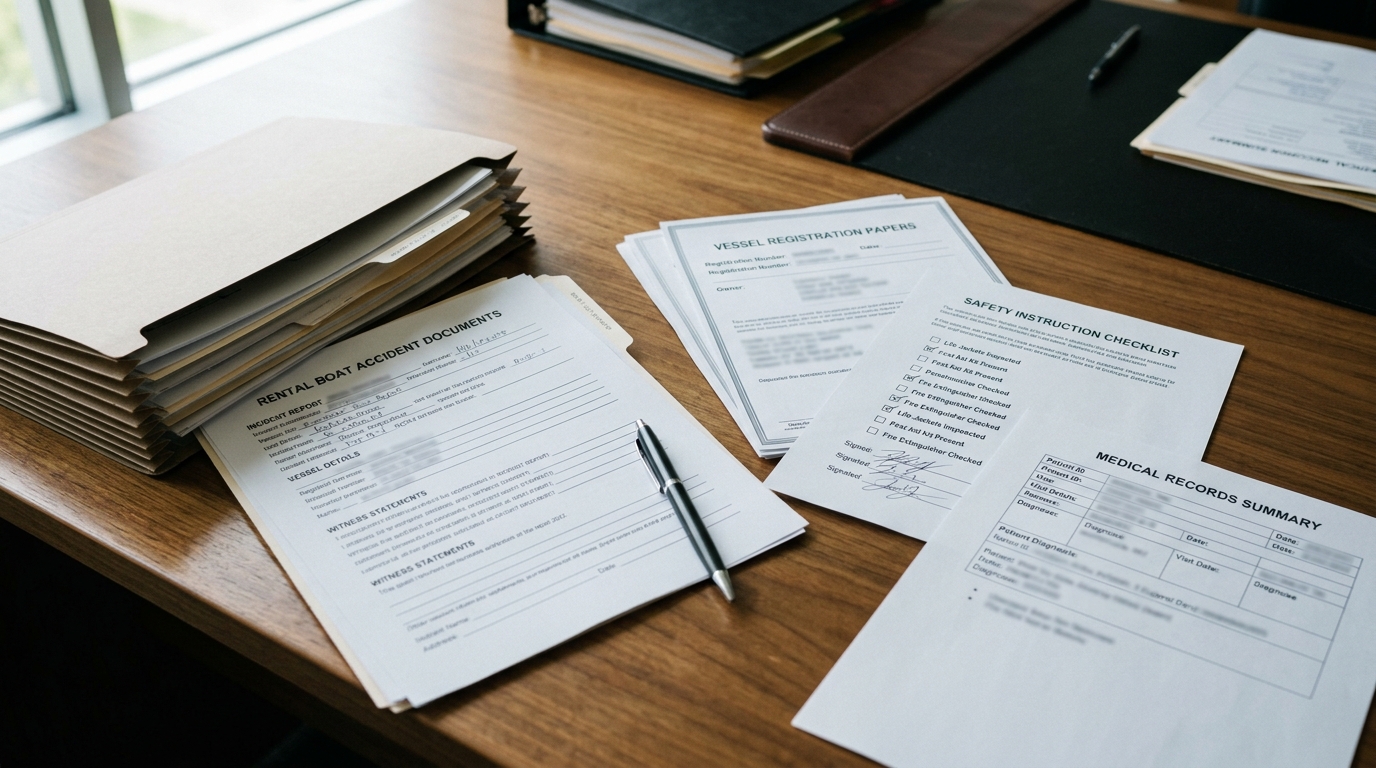
Rental boat accident claims in New York may involve motorboats, pontoon boats, fishing boats, Jet Skis, personal watercraft, kayaks, canoes, paddleboards, marina rentals, guided outings, or other rented watercraft. These cases can involve operator negligence, rental company safety practices, vessel defects, missing equipment, poor instruction, marina hazards, alcohol concerns, and insurance disputes. People reviewing claim options after a watercraft rental injury may use a boating accident lawyer Long Island resource to understand how liability, evidence, and damages are generally evaluated.
Quick Answer
A rental boat accident claim usually depends on what caused the injury and who had control over the vessel, safety instruction, rental process, maintenance, and operation. Potentially responsible parties may include the renter, boat operator, vessel owner, rental company, marina, dock owner, maintenance provider, another boater, product manufacturer, or public entity. Important evidence may include rental agreements, safety instruction forms, vessel inspection records, maintenance logs, accident reports, witness statements, passenger accounts, photos, GPS data, weather records, medical records, and insurance documents.
Key Takeaways
- Rental boat claims may involve both operator negligence and rental company conduct.
- New York livery rules address certain rental safety requirements, including vessel capacity, required equipment, instruction, demonstration, identification, and rental records.
- Personal watercraft rentals have separate rules involving age, instruction, demonstration, identification, equipment, operating area, and recordkeeping.
- A rental company is not automatically liable for every accident, but poor instruction, unsafe equipment, missing records, or negligent rental practices may raise liability questions.
- Boating accident reporting may be required within five days after qualifying accidents involving injury, death, disappearance, or property damage over $1,000.
- Insurance coverage may depend on rental contracts, vessel ownership, operator permission, marina policies, and exclusions.
- Public docks, public launches, public marinas, or government-controlled facilities may involve shorter notice requirements.
Why Rental Boat Accidents Can Be Complicated
Rental boat accidents can be harder to evaluate than privately owned boat accidents because several parties may be involved. The person injured may not know who owned the vessel, who maintained it, who inspected it, what safety instructions were given, or what insurance coverage applies.
A rental boat case may involve:
- A tourist or first-time renter
- A marina or livery operator
- A personal watercraft rental company
- A vessel owner separate from the rental business
- A passenger who did not sign the rental agreement
- A dock or marina hazard
- A maintenance provider
- Another vessel on the water
- A public launch or government-controlled facility
The accident may happen during launch, operation, docking, passenger boarding, fueling, return to the marina, or while the vessel is still tied to a dock. Each stage can involve different evidence and different responsible parties.
Common Rental Boat Accident Scenarios
Rental boat accidents can happen in many ways. The type of accident helps identify the records and safety rules that may matter.
Common scenarios include:
- Renter collides with another vessel
- Personal watercraft rider strikes a boat, dock, swimmer, or buoy
- Passenger is thrown after a sudden turn
- Boat capsizes because of overloading or unsafe operation
- Rental boat hits a dock during return
- Operator speeds through a congested waterway
- Wake throws a passenger or destabilizes another vessel
- Rented kayak or canoe is struck by another boat
- Vessel malfunctions because of poor maintenance
- Life jackets are missing or improperly sized
- Renter receives little or no safety instruction
- Rental company allows operation in unsafe weather
- Passenger slips while boarding from the dock
- Boat is rented to an unqualified or underage operator
A single incident may involve multiple causes. For example, a passenger injury may involve poor rental instruction, excessive speed, missing safety equipment, and unsafe passenger positioning.
New York Livery Rules for Rental Vessels
New York Navigation Law § 71-d addresses safety regulations for liveries that lease, hire, or rent certain vessels. The statute states that a livery operator may not knowingly rent a vessel when the number of people using it exceeds the maximum safety load, when the motor horsepower exceeds the vessel capacity, or when the vessel lacks required equipment for its class. It also includes instruction, demonstration, identification, age, and recordkeeping provisions for certain mechanically propelled vessel rentals. (NYSenate.gov)
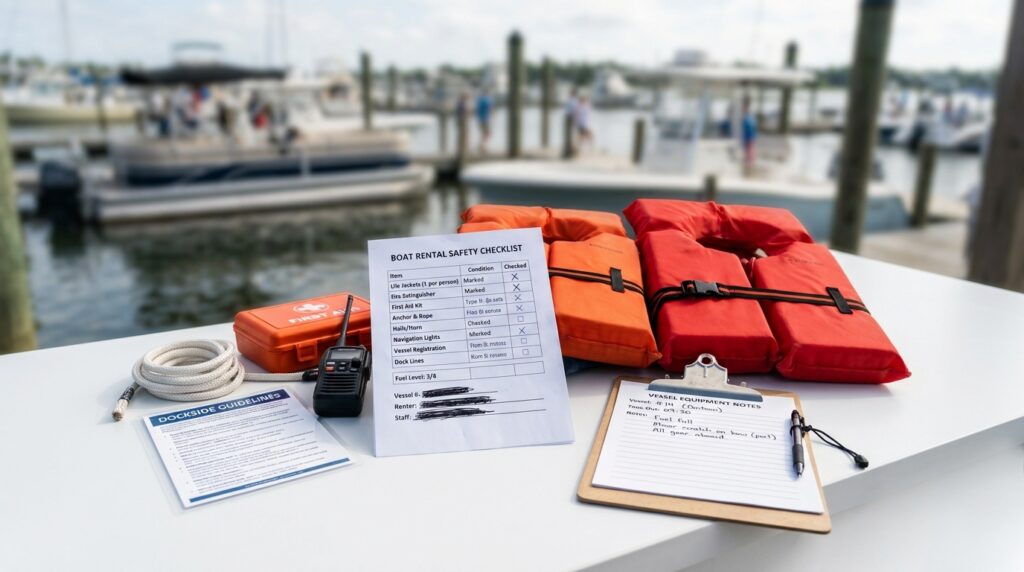
These requirements may become important when a rental accident involves:
- Too many passengers
- Overloaded vessel
- Unsafe horsepower
- Missing required safety equipment
- Poor instruction
- Lack of operating demonstration
- No proof of age or identification
- Missing rental records
- A renter who did not understand basic operation
A violation of a safety rule does not automatically decide every civil injury claim, but it can provide important context when reviewing whether the rental company acted reasonably.
Personal Watercraft Rental Rules
Personal watercraft rentals, including Jet Ski-style rentals, can involve separate safety questions. New York Navigation Law § 73-a requires each rider on a personal watercraft or specialty prop-craft to wear a securely fastened U.S. Coast Guard-approved personal flotation device. It also addresses engine cut-off lanyard use, sunset-to-sunrise restrictions, designated bathing area limits, reckless maneuvers, and livery rental requirements. (NYSenate.gov)
For personal watercraft liveries, the statute includes requirements involving renter age, operating procedure explanation and demonstration, safety equipment instruction, operator ability demonstration, identification, and recordkeeping. (NYSenate.gov)
PWC rental claims may involve questions such as:
- Was the renter old enough?
- Was identification checked?
- Was a safety demonstration provided?
- Did the renter demonstrate ability to operate the craft?
- Was a proper life jacket provided?
- Was the lanyard engine cut-off switch used when required?
- Was operation restricted to a designated area?
- Were rental records kept?
- Was the PWC maintained and inspected?
- Did staff supervise or monitor the rental area?
Because personal watercraft can operate at high speed and make sharp turns, small failures in instruction or supervision can become significant.
Operator Negligence in a Rental Boat Accident
The person operating the rental boat may be responsible if careless operation caused the accident. A renter may be inexperienced, distracted, impaired, unfamiliar with local waterways, or unaware of navigation rules. Still, operators are expected to use reasonable care.
Operator negligence may involve:
- Excessive speed
- Reckless turns
- Poor lookout
- Distracted operation
- Failing to yield
- Operating too close to docks, swimmers, or moored boats
- Ignoring no-wake zones
- Unsafe passenger positioning
- Boating while intoxicated
- Operating in bad weather
- Failing to use required safety equipment
- Ignoring rental instructions
- Failing to report the accident
New York Navigation Law § 45 requires vessel operators to navigate carefully and prudently and prohibits speed greater than reasonable and prudent under existing conditions and hazards. It also limits vessel speed within 100 feet of shore, docks, piers, rafts, floats, or anchored vessels in many circumstances. (NYSenate.gov)
Rental Company Negligence
A rental company is not automatically liable just because a rental boat accident happened. The claim usually needs evidence showing what the company did or failed to do.
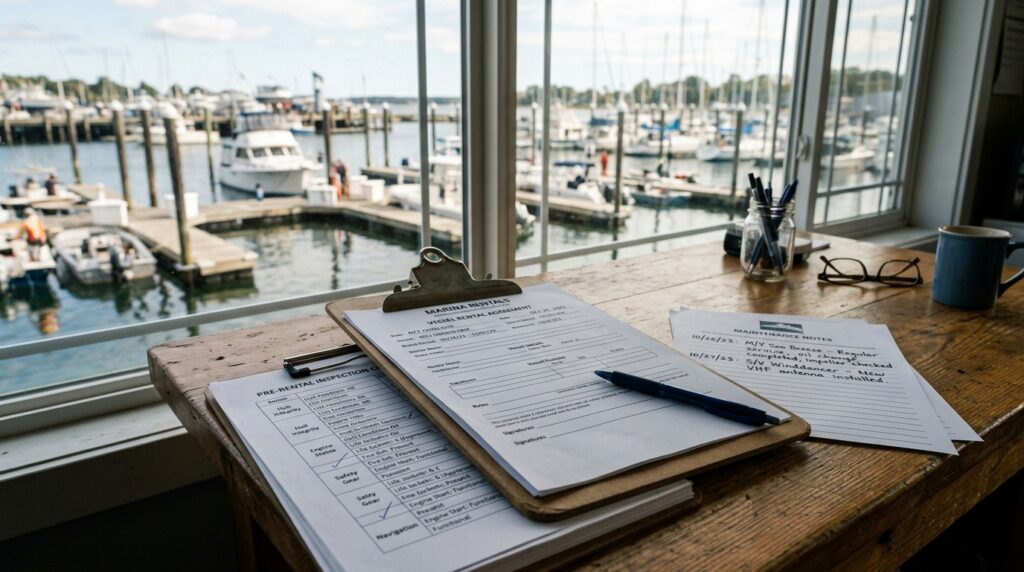
Rental company negligence may involve:
- Renting an unsafe vessel
- Failing to inspect the vessel
- Failing to maintain steering, throttle, engine, lights, or safety equipment
- Renting to an underage or unqualified operator
- Providing little or no safety instruction
- Failing to explain local hazards
- Ignoring bad weather or unsafe water conditions
- Overloading the vessel
- Failing to provide proper life jackets
- Failing to keep required rental records
- Allowing operation near unsafe areas
- Failing to warn about no-wake zones or restricted areas
- Poor dock supervision during launch or return
Rental company records can become central evidence because they may show what instructions were given, what equipment was provided, who inspected the boat, and who was authorized to operate it.
Vessel Owner Liability
Sometimes the rental company is not the actual vessel owner, or ownership may be shared through a marina, boat club, fleet operator, private owner, or business entity. Ownership matters because New York Navigation Law § 48 addresses owner responsibility for death, injury, or property damage caused by negligent vessel operation when the vessel is operated with the owner’s express or implied permission. (NYSenate.gov)
Important ownership questions include:
- Who owned the rental vessel?
- Who controlled the vessel?
- Who maintained it?
- Did the renter have permission to operate it?
- Was the vessel leased, borrowed, or part of a fleet?
- Did the owner provide insurance?
- Did the owner know about equipment problems?
- Did the owner delegate rental operations to another company?
Ownership and permission can affect liability, insurance coverage, and document requests.
Passenger Injury Claims in Rental Boat Accidents
Passengers can be injured even when they did not rent or operate the boat. A passenger may be thrown from a seat, injured during docking, hurt by wake impact, struck during collision, or injured because the operator received poor instruction.
Passenger-related questions may include:
- Was the passenger given safety instructions?
- Was the passenger told where to sit?
- Was a properly sized life jacket available?
- Did the operator accelerate or turn suddenly?
- Was the boat overloaded?
- Was alcohol involved?
- Did the rental company know the operator was inexperienced?
- Was the passenger injured by defective equipment?
- Did another vessel contribute?
A passenger may not have signed the rental agreement, but their rights may still need to be reviewed. A related boat passenger injury claim resource can help explain why operator conduct, owner permission, and vessel evidence matter after a passenger injury.
Alcohol and Rental Boat Accidents
Alcohol can be a major issue in rental boat accidents. A renter may drink before departure, bring alcohol onto the boat, or operate while impaired during the rental period.
Alcohol-related evidence may include:
- Law enforcement reports
- Chemical test results
- Passenger statements
- Witness accounts
- Dock or marina camera footage
- Bar, restaurant, or marina receipts
- Photos or videos
- Operator admissions
- Open containers
- Rental staff observations
New York Navigation Law § 49-a addresses vessel operation while ability is impaired by alcohol or drugs. Alcohol evidence may help explain unsafe speed, poor lookout, reckless turns, collision, delayed reaction, or failure to follow rental instructions.
Rental Agreements and Waivers
Rental agreements are important, but they do not automatically answer every claim. A rental contract may contain safety instructions, assumption-of-risk language, indemnity terms, insurance information, operating boundaries, equipment lists, damage charges, and waiver language.
Important rental agreement issues may include:
- Who signed the agreement?
- Who was authorized to operate?
- Were passengers listed?
- Were rules explained clearly?
- Were restricted areas identified?
- Was safety equipment acknowledged?
- Did the renter receive instructions?
- Did the renter initial a checklist?
- Did the agreement mention insurance?
- Did the document conflict with what actually happened?
A waiver may be disputed depending on the wording, facts, law, and conduct involved. It should be reviewed carefully rather than assumed to eliminate every claim.
Safety Equipment and Life Jackets
Safety equipment can be a key issue in rental boat accidents. New York State Parks explains that boaters are required to have one life jacket for each person on board and that life jackets must be U.S. Coast Guard-approved, readily accessible, in good condition, and the proper size for the intended wearer. (New York State Parks)
Safety equipment questions may include:
- Were enough life jackets provided?
- Were they the right size?
- Were they accessible?
- Were they damaged, faded, or torn?
- Were passengers told where safety equipment was stored?
- Was a throwable flotation device required?
- Was a fire extinguisher required?
- Were navigation lights working?
- Was a sound-producing device provided?
- Was the ignition safety switch working when equipped?
Missing or defective safety equipment may affect both liability and injury severity.
Mechanical Failure and Poor Maintenance
Some rental boat accidents happen because equipment fails. A renter may have little way to know whether the vessel was properly inspected before departure.
Maintenance-related issues may involve:
- Steering failure
- Throttle malfunction
- Engine failure
- Fuel system problems
- Electrical issues
- Defective navigation lights
- Broken ladder
- Loose railing
- Defective seat
- Faulty bilge pump
- Personal watercraft lanyard issue
- Poor prior repairs
- Missing inspection records
Useful evidence may include maintenance logs, pre-rental inspection forms, repair invoices, employee notes, prior complaints, photos, service records, and expert inspection findings. If mechanical failure is suspected, the vessel and failed parts should be preserved before repairs are completed.
Weather, Water Conditions, and Local Hazards
Rental companies and operators may need to consider weather and local waterway hazards. A renter may be unfamiliar with currents, no-wake zones, shallow areas, channels, sandbars, tides, congested routes, or restricted areas.
Important questions include:
- Was bad weather forecast before departure?
- Did rental staff warn about conditions?
- Were operating boundaries explained?
- Was the renter told about no-wake zones?
- Were local hazards marked on a map?
- Was the vessel suitable for the conditions?
- Did the renter continue despite worsening weather?
- Did the rental company allow operation when conditions were unsafe?
- Were waves, wind, darkness, or visibility issues involved?
Weather screenshots, marine forecasts, rental maps, witness statements, GPS data, and staff testimony may all become important.
Dock, Marina, and Boarding Injuries
Rental boat injuries may happen before or after the vessel is operating. A renter or passenger may be hurt while boarding, disembarking, tying up, fueling, walking on a dock, stepping onto a ramp, or returning equipment.
Dock and marina hazards may include:
- Wet or slippery surfaces
- Broken dock boards
- Loose cleats
- Poor lighting
- Missing handrails
- Unsafe ladders
- Unsecured ropes
- Fuel spills
- Defective ramps
- Poorly marked edges
- Unsafe gangways
- Electrical hazards
- Poor staff assistance during docking
A premises liability attorney resource may help explain how property control, maintenance, inspection records, and notice evidence can overlap with rental boat accident claims.
Accident Reporting After a Rental Boat Accident
New York Navigation Law § 47-b requires a written report within five days after a vessel accident involving death, injury, disappearance under the water, or property damage to any one person over $1,000. (NYSenate.gov) New York State Parks also states that boating accidents must be reported within five days when they involve injury requiring medical care beyond basic first aid, death or disappearance, or damage to any one party over $1,000. (New York State Parks)
A boating accident report may help document:
- Date and time
- Waterway or marina location
- Vessel information
- Operator information
- Owner information
- Passenger information
- Injury details
- Property damage
- Weather and water conditions
- Witnesses
- Law enforcement involvement
A report does not prove the entire claim, but it creates an official record close to the incident.
Evidence That Can Strengthen a Rental Boat Claim
Rental boat claims depend heavily on records that may not be in the injured person’s possession. These records should be identified early.
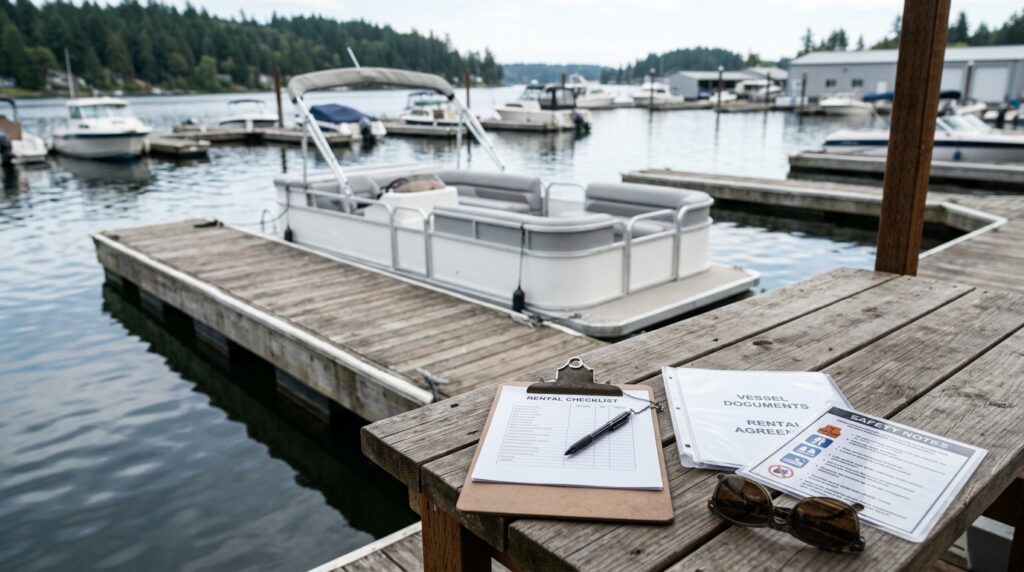
Helpful evidence may include:
- Rental agreement
- Safety instruction checklist
- Age and identification records
- Vessel inspection forms
- Maintenance logs
- Repair invoices
- Vessel registration records
- Boating accident report
- Photos of the vessel
- Photos of safety equipment
- Photos of the dock or marina
- Photos of injuries
- Passenger statements
- Witness contact information
- GPS or tracking data
- Phone photos and videos
- Weather and water condition records
- Dock camera footage
- Employee statements
- Insurance documents
- Medical records
- Expert inspection findings
For broader documentation planning, readers may review how evidence for personal injury claims can help connect the incident, injury, responsible party, and damages.
Medical Records and Injury Documentation
Medical care should come first after a rental boat accident. Watercraft injuries may involve impact, ejection, drowning risk, propeller contact, burns, falls, collisions, or delayed symptoms.
Common injuries may include:
- Concussions
- Traumatic brain injuries
- Neck injuries
- Back injuries
- Spinal injuries
- Fractures
- Shoulder injuries
- Knee injuries
- Lacerations
- Burns
- Drowning-related injuries
- Hypothermia
- Internal injuries
- Soft tissue injuries
- Psychological trauma
- Wrongful death in severe cases
Medical records help show when symptoms began, what injuries were diagnosed, what treatment was required, and how the injury affected work or daily life.
Insurance Coverage in Rental Boat Accidents
Insurance can be complicated in rental boat cases. Coverage may depend on ownership, rental agreement language, operator permission, vessel type, commercial use, policy exclusions, location, and whether alcohol or reckless operation is alleged.
Potential insurance sources may include:
- Rental company insurance
- Vessel owner policy
- Boat insurance
- Marina liability insurance
- Homeowner’s insurance
- Umbrella or excess coverage
- Product liability coverage
- Commercial vessel coverage
- Public entity coverage in limited cases
Insurance disputes may involve whether the operator was authorized, whether the renter violated the agreement, whether the boat was used outside permitted areas, whether alcohol was involved, whether the vessel was defective, or whether the injury happened on the boat, dock, ramp, shore, or water.
Comparative Fault and Blame Arguments
Defendants and insurers may argue that the injured person caused or contributed to the accident. They may claim the renter ignored instructions, operated too fast, failed to wear a life jacket, traveled outside a permitted area, overloaded the boat, drank alcohol, or failed to avoid an obvious hazard.
Comparative fault issues may require review of:
- Rental instructions
- Safety demonstrations
- Witness statements
- Passenger accounts
- GPS data
- Weather records
- Vessel condition
- Life jacket availability
- Operating boundaries
- Dock conditions
- Operator experience
- Alcohol evidence
Blame arguments should be evaluated against the full evidence, not only the rental company’s version of events.
Public Docks, Launches, and Government-Controlled Areas
Some rental boat accidents involve public docks, municipal launches, public marinas, public vessels, state parks, or government-controlled areas. If a public corporation or government-related entity may be involved, earlier notice rules may apply.
New York General Municipal Law § 50-e generally requires a notice of claim within 90 days when a notice of claim is required for certain tort claims against public corporations. The notice must include information such as the nature of the claim, time, place, manner in which it arose, and claimed injuries or damages so far as practicable. (NYSenate.gov)
This makes the exact accident location important. A rental boat accident near a public launch, municipal dock, state park facility, or public marina should be reviewed early.
Deadlines for Rental Boat Accident Claims
Deadlines depend on the claim type and responsible parties. The New York Courts statute of limitations timetable lists three years for many negligence-based personal injury claims, two years for wrongful death claims, and three years for product liability claims. (New York Courts)
Practical deadlines may arrive sooner. Rental records, inspection logs, GPS data, surveillance footage, accident reporting, insurance notice, vessel repair, and public entity notice rules can all create urgency well before a lawsuit deadline.
Common Mistakes After a Rental Boat Accident
Some mistakes can make a rental boat accident claim harder to prove.
Common mistakes include:
- Not getting medical care promptly
- Failing to report a qualifying boating accident
- Not saving the rental agreement
- Not identifying the operator and vessel owner
- Not collecting passenger and witness information
- Not photographing the vessel and safety equipment
- Not preserving GPS, phone, or tracking data
- Allowing the vessel to be repaired before inspection
- Throwing away damaged clothing or safety equipment
- Not documenting weather or water conditions
- Not asking for rental instruction records
- Speaking casually with insurance adjusters
- Accepting a quick settlement before injuries are fully known
- Missing public entity notice deadlines
A strong claim usually depends on early reporting, preserved evidence, clear medical records, and identification of every potentially responsible party.
When Legal Guidance May Be Useful
Legal guidance may be useful when a rental boat accident causes serious injury, involves a personal watercraft, raises questions about rental instruction, includes mechanical failure, involves alcohol, happened at a marina, or requires preservation of rental records and vessel evidence.
A rental boat accident claim may require review of livery rules, operator conduct, owner liability, rental agreements, safety instruction forms, inspection records, maintenance logs, accident reports, insurance coverage, medical records, public entity rules, and deadlines.
People researching local support may review a Farmingdale legal office location when looking for Long Island boating accident claim information. A broader boat accident attorney guide may also help readers understand how watercraft injury claims differ from ordinary accident claims. Publicly available personal injury case results may provide general context, although every claim depends on its own facts, evidence, injuries, insurance coverage, and applicable law.
FAQs About Rental Boat Accident Claims
Can a rental boat company be liable for an accident?
Yes, a rental boat company may be reviewed if unsafe equipment, poor maintenance, missing safety gear, inadequate instruction, improper rental records, underage rental, or failure to warn about hazards contributed to the accident. Liability depends on the facts and evidence.
What records are important after a rental boat accident?
Important records may include the rental agreement, safety checklist, age and identification records, instruction forms, inspection logs, maintenance records, accident reports, photos, witness statements, GPS data, medical records, and insurance documents.
Does a rental agreement waiver prevent every claim?
Not necessarily. A waiver or rental agreement should be reviewed carefully, but it does not automatically answer every issue. The wording, circumstances, safety violations, company conduct, vessel condition, and applicable law may all matter.
What if the rental boat operator caused a passenger injury?
A passenger may still have a claim when the rental boat operator caused the injury through unsafe speed, reckless turns, intoxication, poor lookout, unsafe wake, or failure to follow safety instructions. The rental company and vessel owner may also need review.
How long does someone have to file a rental boat accident claim?
The deadline depends on the claim type and responsible party. Many negligence-based New York injury claims have a three-year limitations period, but wrongful death, product liability, public entity, accident reporting, insurance notice, and evidence preservation issues may involve shorter timelines.
Final Thoughts
Rental boat accident claims in New York require careful review because the operator, renter, rental company, vessel owner, marina, maintenance provider, another boater, or public entity may all play a role. The strongest claims usually depend on prompt medical care, preserved rental records, accident reports, photos, witness statements, safety equipment evidence, maintenance records, insurance review, and a clear explanation of how the accident happened.