
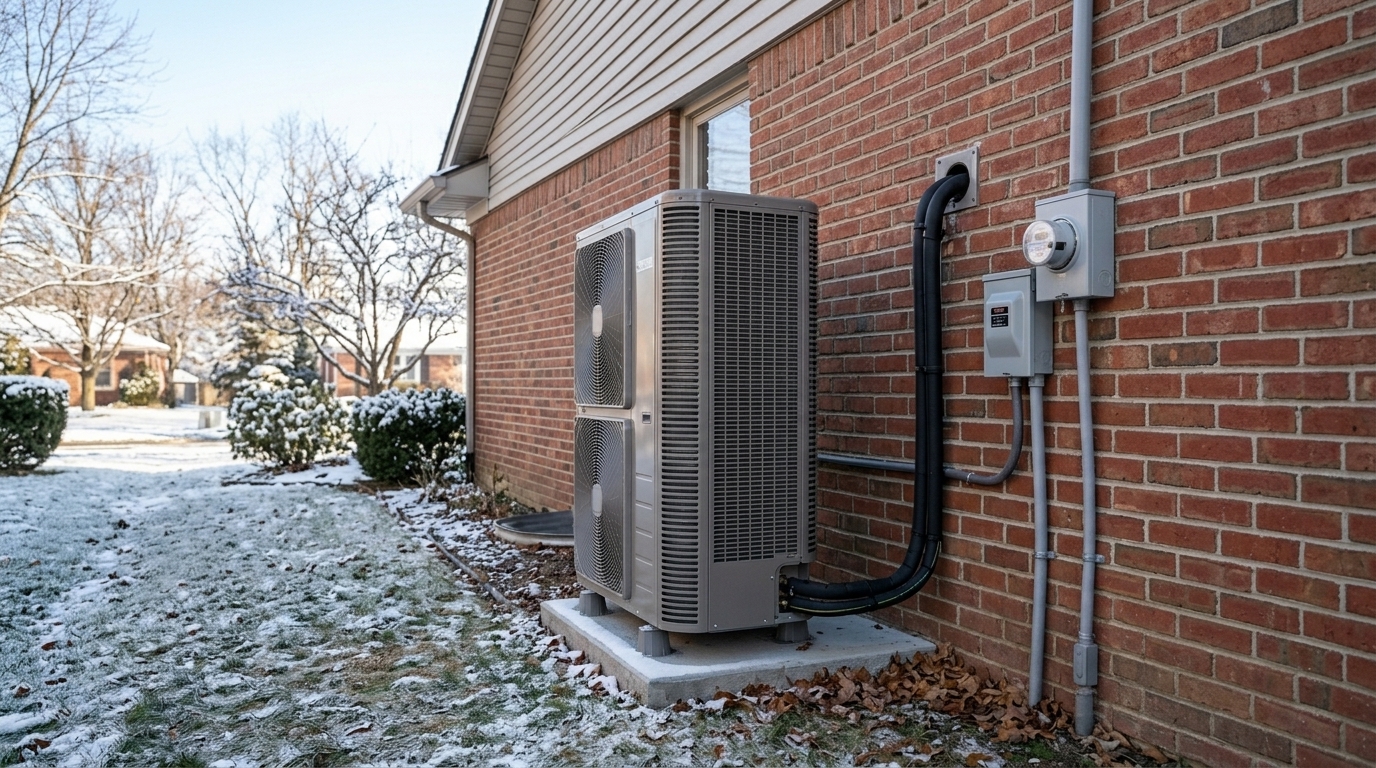
Heat pumps are becoming an increasingly important option for homeowners evaluating how they heat and cool their homes.
For Dexter residents, the appeal is straightforward: a heat pump can provide both heating and cooling from a single system, while modern cold-climate equipment is designed to operate at outdoor temperatures far below those associated with older generations of heat-pump technology.
That does not mean every Dexter home should automatically replace its furnace and air conditioner with a heat pump.
The right decision depends on the home’s heating load, existing HVAC equipment, ductwork, electrical service, insulation, utility costs, comfort priorities, and the specific heat pump being considered.
For homeowners already facing aging equipment or repeated HVAC repair Dexter MI needs, however, heat-pump technology deserves consideration when planning the home’s next heating and cooling system.
Quick Answer
Dexter homeowners are considering heat pumps because modern systems can provide efficient heating and cooling from one piece of HVAC equipment, while cold-climate models are specifically designed for lower outdoor temperatures.
The strongest installations start with proper equipment selection and sizing. A heat pump should be matched to the home’s heating load, low-temperature performance requirements, ductwork, electrical capacity, and backup-heating strategy rather than selected only by its advertised efficiency rating.
Key Takeaways
- Heat pumps provide both heating and cooling.
- Modern cold-climate models are designed for colder regions.
- Heat-pump performance varies significantly by model and outdoor temperature.
- Proper sizing is particularly important in Michigan.
- Some Dexter homes can use an all-electric heat-pump configuration.
- Other homes may benefit from a heat pump paired with a furnace.
- Ductless heat pumps provide another option for homes or spaces without suitable ductwork.
- Weatherization can reduce heating and cooling loads before equipment replacement.
- Installation quality is critical to performance and comfort.
What Exactly Is a Heat Pump?
A heat pump is an HVAC system that transfers heat from one place to another.
During summer, it operates similarly to a conventional central air conditioner:
Heat is removed from inside the home and transferred outdoors.
During winter, the refrigeration cycle reverses:
The system extracts available heat from outdoor air and transfers it into the home.
This ability to reverse operation allows one system to provide both heating and cooling.
Unlike a conventional gas furnace, an air-source heat pump does not create its primary heat through combustion.
That fundamental difference is one reason homeowners comparing HVAC replacement options increasingly encounter heat-pump technology.
How Can a Heat Pump Get Heat From Cold Outdoor Air?
This question causes understandable confusion.
Cold outdoor air still contains thermal energy.
A heat pump uses refrigerant, compressors, heat exchangers, and other components to absorb available heat outdoors and move it indoors.
As outdoor temperatures fall, extracting that heat becomes more demanding.
That is why homeowners should not evaluate a heat pump only by asking whether it can operate in cold weather.
The more useful questions are:
- How much heating capacity does it provide at low temperatures?
- How efficient is it under those conditions?
- What is the home’s heating requirement at the same temperature?
Those questions determine whether a particular system is appropriate for a Dexter home.
Why Older Opinions About Heat Pumps Can Be Misleading
Some homeowners associate heat pumps primarily with warmer climates.
That perception developed partly because older equipment often experienced significant capacity limitations as outdoor temperatures dropped.
Modern equipment has changed considerably.
Cold-climate air-source heat pumps can use technologies such as:
- Variable-speed compressors
- Inverter-driven operation
- Improved refrigerant circuits
- Advanced controls
- Enhanced low-temperature operation
The result is a category of equipment designed specifically for heating in colder climates.
However, homeowners should still compare actual low-temperature performance specifications rather than assuming every new heat pump is equally suitable for Michigan.
1. One System Can Provide Heating and Cooling
One of the most obvious advantages of a heat pump is that the same refrigeration system can provide both winter heating and summer cooling.
A conventional HVAC arrangement may include:
- Gas furnace
- Central air conditioner
A heat-pump arrangement can instead use:
- Heat pump
- Air handler
or, in a hybrid configuration:
- Heat pump
- Gas furnace
For homeowners already planning to replace aging cooling equipment, considering a heat pump can therefore make sense because the outdoor equipment is already part of the replacement conversation.
2. Heat Pumps Can Be Highly Energy Efficient
A furnace converts fuel or electricity into heat.
A heat pump primarily uses electricity to move existing heat.
Because of that operating principle, heat pumps can deliver more heating energy than the electrical energy they consume under many operating conditions.
Actual efficiency depends on:
- Outdoor temperature
- Equipment design
- System sizing
- Indoor temperature
- Installation
- Defrost operation
- Backup heat
Homeowners should therefore evaluate seasonal and low-temperature performance rather than relying on one headline efficiency number.
3. Cold-Climate Models Expand Michigan Applications
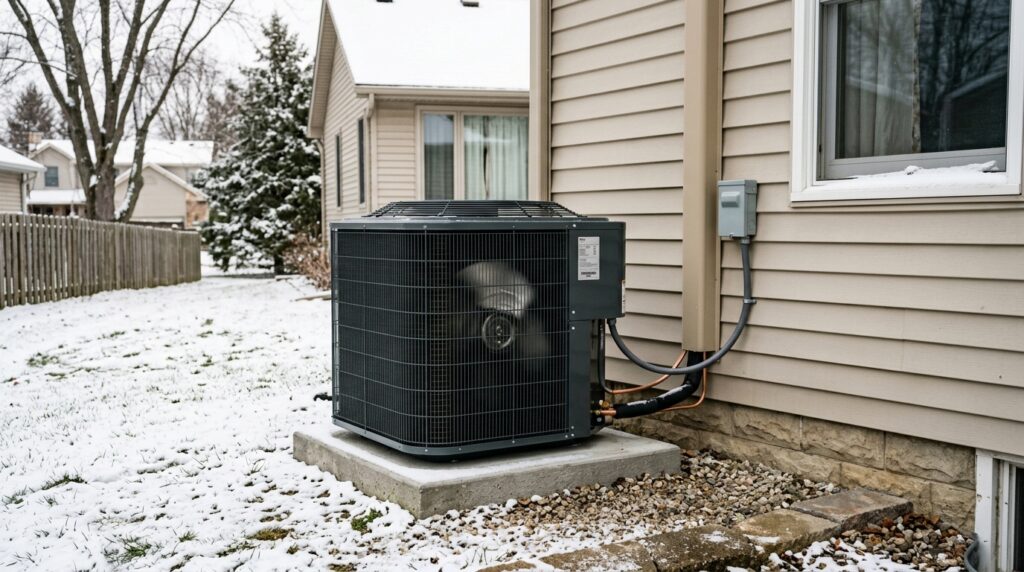
Cold-climate heat pumps are particularly relevant to Dexter because winter heating is a major part of annual HVAC demand.
Equipment intended for cold climates is designed to maintain useful performance at substantially lower outdoor temperatures than conventional heat pumps historically associated with mild regions.
That makes professional heat pump Dexter MI system selection important.
A contractor should be able to explain:
- Heating capacity at low temperatures
- Efficiency at low temperatures
- Home design heating load
- Supplemental heat strategy
- Expected system operation during severe weather
Without those details, homeowners may be comparing equipment without knowing how it will perform when heating matters most.
4. Variable-Speed Operation Can Improve Comfort
Many modern heat pumps use variable-speed or inverter-driven compressors.
Instead of operating only at full capacity or completely off, these systems can adjust output over a range.
Potential comfort advantages include:
- Longer, steadier operating cycles
- Smaller temperature swings
- More consistent airflow
- Better matching of output to changing loads
Michigan weather can change substantially throughout a single season.
Variable-capacity operation allows equipment to respond differently during mild fall weather than during colder winter conditions.
5. Heat Pumps Can Replace an Aging Air Conditioner
Some Dexter homeowners may first encounter heat pumps because their air conditioner needs replacement.
Since both conventional air conditioners and air-source heat pumps use an outdoor refrigeration system, homeowners replacing AC equipment can consider whether the new outdoor unit should also provide heating.
This does not automatically mean removing the existing furnace.
A heat pump may sometimes be paired with a compatible furnace to create a dual-fuel system.
That gives homeowners another pathway into heat-pump technology without necessarily moving immediately to an all-electric heating configuration.

What Is a Dual-Fuel Heat Pump System?
A dual-fuel system combines:
- An electric heat pump
- A gas furnace
The heat pump provides heating under selected conditions.
The furnace serves as another heating source when system controls determine that switching is appropriate.
The changeover strategy can consider:
- Outdoor temperature
- Heat-pump capacity
- Energy prices
- Equipment efficiency
- Home heating load
This configuration can be attractive to homeowners who want heat-pump heating while retaining furnace capability.
Dual Fuel Is Not Automatically Better Than All-Electric
Dual-fuel systems are useful, but they are not automatically the best solution for every home.
An all-electric configuration may make sense when:
- The selected heat pump can satisfy the home’s heating needs.
- Electrical infrastructure is appropriate.
- The homeowner prefers an electric heating strategy.
- Supplemental electric heating is properly designed where needed.
Dual fuel may make more sense when:
- A compatible furnace is being retained.
- The home has substantial peak heating demand.
- The homeowner wants gas backup.
- Utility economics favor switching between energy sources.
The decision should be based on the specific home rather than a general rule.
6. Ductless Heat Pumps Offer Another Upgrade Path
Not every Dexter home has ductwork suitable for a conventional central heat pump.
Ductless mini-split systems can provide heating and cooling without requiring traditional supply and return ducts throughout the conditioned area.
They may be useful for:
- Home additions
- Finished attics
- Older homes without ductwork
- Rooms with persistent comfort problems
- Converted garages
- Targeted zones
A ductless system typically uses an outdoor heat-pump unit connected to one or more indoor units.
Proper equipment sizing and indoor-unit placement remain essential.
7. Heat Pumps Can Help Address Zoned Comfort Needs
Some homes contain spaces that are difficult to condition evenly with the central HVAC system.
Examples can include:
- Second-floor bedrooms
- Additions
- Home offices
- Bonus rooms
- Rooms above garages
A ductless heat pump can sometimes provide targeted heating and cooling for these areas without substantially modifying the existing central system.
However, homeowners should first determine why the room is uncomfortable.
Poor insulation, air leakage, or duct problems may still deserve correction.
Heat Pump Sizing Is Critical in Dexter
HVAC equipment should not be selected solely by square footage or by copying the capacity of the existing system.
A professional load calculation should consider factors such as:
- Home size
- Insulation
- Air leakage
- Windows
- Orientation
- Occupancy
- Design temperatures
- Building construction
Heat-pump sizing deserves particular attention because the system must address both cooling and heating requirements.
Oversizing can create its own performance issues.
Undersizing without an appropriate supplemental strategy can leave the system unable to meet peak heating demand.
Weatherization Can Change the Heat Pump Equation
A home’s heating load is not fixed forever.
Improvements such as:
- Air sealing
- Attic insulation
- Wall insulation
- Rim-joist sealing
- Duct sealing
can reduce the amount of heat required to maintain indoor comfort.
That means weatherization can sometimes allow a smaller HVAC system to satisfy the home’s needs.
For Dexter homeowners planning substantial insulation or air-sealing work, coordinating those improvements with HVAC replacement can produce a more accurate equipment-sizing decision.
Existing Ductwork Needs Evaluation
A central heat pump depends on ductwork just as a furnace and central air conditioner do.
Existing ducts should be evaluated for:
- Sizing
- Leakage
- Restrictions
- Supply distribution
- Return-air capacity
- Insulation where appropriate
Installing high-performance equipment onto problematic ductwork can limit the benefits of the new system.
Persistent room-to-room temperature differences should therefore be investigated as part of the replacement process.
Electrical Capacity May Need Attention
Heat pumps use electricity for heating and cooling.
Depending on the existing home and equipment configuration, installation may require evaluation of:
- Electrical panel capacity
- Available circuits
- Breaker requirements
- Wiring
- Supplemental heating loads
Some homes may already have adequate electrical infrastructure.
Others may require modifications.
Electrical requirements should be identified during project planning rather than discovered late in installation.
Heat Pumps Still Need Defrost Cycles
During cold, damp weather, frost can develop on the outdoor heat exchanger.
Heat pumps are designed to periodically enter defrost mode to remove that frost.
Homeowners may notice:
- A change in operating sound
- Temporary steam around the outdoor unit
- Different indoor-air behavior
These observations can be normal during defrost.
Persistent heavy ice that does not clear properly is different and may indicate a problem requiring professional service.
Snow Clearance Matters During Michigan Winters
Outdoor heat-pump equipment needs airflow even when snow is on the ground.
Homeowners should prevent deep snow from completely obstructing the unit while following manufacturer clearance requirements.
They should avoid:
- Striking the unit with shovels
- Chipping ice from coils
- Using sharp tools
- Pouring boiling water over the equipment
If substantial ice remains despite normal defrost operation, professional evaluation is appropriate.
Heat Pumps Do Not Eliminate HVAC Maintenance
Heat pumps still contain mechanical, electrical, and refrigeration components.
Maintenance may include inspection of:
- Filters
- Indoor coils
- Outdoor coils
- Electrical components
- Blower operation
- Refrigerant-related performance
- Drainage
- Controls
- Defrost operation
Because heat pumps can operate during both heating and cooling seasons, maintenance should reflect their year-round workload.
Repair History Can Influence the Upgrade Decision
Homeowners with relatively new, dependable HVAC equipment may have little reason to replace it solely because heat-pump technology is available.
The decision becomes more relevant when existing equipment is experiencing:
- Frequent repairs
- Major component problems
- Increasing energy use
- Declining comfort
- Aging furnace or AC equipment
If repeated HVAC repair Dexter MI visits are becoming necessary, comparing continued repair costs with replacement options can help homeowners plan more strategically.
Heat Pump Upgrades Should Start With the Home, Not the Equipment
A successful heat-pump project begins by understanding the building.
Important questions include:
- How much heating does the home require?
- How much cooling does it require?
- Where is conditioned air being lost?
- Is the duct system adequate?
- Is electrical capacity sufficient?
- What happens during extreme cold?
- Will another heat source remain?
Only after those questions are answered should specific equipment be selected.
This approach helps avoid buying a high-efficiency system that is poorly matched to the home.
Choosing a Heat Pump Contractor in Dexter
Heat-pump installation requires more than replacing one outdoor unit with another.
When evaluating a provider for heating and cooling Dexter MI, homeowners may want to ask whether the contractor evaluates:
- Heating and cooling loads
- Low-temperature capacity
- Ductwork
- Airflow
- Electrical requirements
- Backup heating
- Controls
- Equipment commissioning
Installation quality can have a substantial influence on actual performance.
The goal should be a complete system design rather than simply purchasing equipment with an impressive efficiency rating.
Heat Pump Operating Costs Depend on More Than Equipment Efficiency
Heat pumps can be highly efficient, but whether they reduce annual heating costs depends on several local and household factors.
Important variables include:
- Electricity rates
- Natural-gas rates
- Existing furnace efficiency
- Existing air-conditioner efficiency
- Home insulation
- Air leakage
- Thermostat settings
- Heat-pump efficiency
- Low-temperature performance
- Supplemental heating use
A homeowner replacing electric resistance heat may experience a very different financial result than someone replacing a relatively new high-efficiency gas furnace.
That is why operating-cost comparisons should use the home’s actual energy prices and heating load rather than generic national averages.
The U.S. Department of Energy explains that heat pumps transfer heat rather than generate it and can provide efficient heating and cooling across a wide range of climates.
Cold-Weather Performance Matters More Than the Headline Rating
Heat pumps are commonly marketed using efficiency ratings such as HSPF2 and SEER2.
Those ratings are useful, but Dexter homeowners should also look at performance at lower outdoor temperatures.
The critical questions include:
- How much heating capacity remains at 17°F?
- What capacity remains around 5°F?
- What is the home’s heating load at those temperatures?
- When does supplemental heating begin?
- How much backup heating is expected annually?
DOE notes that cold-climate heat pumps are designed for operation in regions where temperatures regularly fall below freezing and identifies ENERGY STAR Cold Climate models as an option for colder regions.
The best equipment is therefore not necessarily the model with the highest laboratory efficiency rating. It is the model that is appropriately matched to the home’s actual winter conditions.
Utility Rates Can Change Which Heating Strategy Is Most Economical
Heat pumps use electricity, while many Dexter homes may currently heat with natural gas.
The relative operating cost of the two systems depends partly on utility prices.
If electricity is relatively inexpensive compared with natural gas, heat-pump heating may become more financially attractive.
If natural gas remains comparatively inexpensive, a dual-fuel system may offer a different economic balance.
Homeowners comparing options should consider:
Heat delivered per unit of energy cost, not simply the posted electricity or gas rate.
Because heat pumps move heat rather than generate it directly, one unit of electrical energy can deliver multiple units of heat under many operating conditions.
However, that relationship changes as outdoor temperatures fall.
Dual-Fuel Economics Depend on the Changeover Point
A dual-fuel system can switch between a heat pump and gas furnace.
The temperature at which that change occurs can be based on:
- Heat-pump capacity
- Heat-pump efficiency
- Furnace efficiency
- Electricity rates
- Gas rates
- Home heating load
The most economical changeover temperature is not necessarily the same as the coldest temperature at which the heat pump can technically operate.
A properly designed control strategy can prioritize:
- Lowest operating cost
- Maximum efficiency
- Comfort
- Reduced gas use
- Equipment preference
The ideal setting may change if utility prices change substantially over time.
All-Electric Heat Pump Systems Need a Peak-Heating Strategy
A homeowner planning to eliminate furnace heating should understand what happens during the coldest conditions.
Depending on the equipment and home, supplemental heating may come from:
- Electric resistance elements
- Additional heat-pump capacity
- Multiple heat-pump zones
- Another designed backup source
Supplemental resistance heat can provide dependable heating but typically consumes more electricity than normal heat-pump operation.
That is why good load calculations, weatherization, and cold-climate equipment selection are especially important in an all-electric design.
Weatherization Can Improve Heat Pump Economics
A heat pump has less work to do when the home loses less heat.
Before replacement, homeowners may benefit from evaluating:
- Attic insulation
- Air leakage
- Rim joists
- Duct leakage
- Windows and doors
- Basement or crawl-space boundaries
DOE specifically recommends weatherizing homes when replacing gas heating with heat pumps to improve comfort and potential cost savings.
Reducing the heating load can potentially:
- Reduce equipment size
- Reduce supplemental heating demand
- Improve comfort
- Lower annual energy consumption
This is one reason HVAC replacement and building-envelope improvements should not always be planned independently.
Current Federal Heat Pump Tax Credits Have Changed
Homeowners should be cautious when reading older heat-pump articles that describe federal tax credits as though they remain available indefinitely.
Under current federal law, the residential Energy Efficient Home Improvement Credit under Section 25C is not available for property placed in service after December 31, 2025. IRS guidance specifically confirms that the credit ended for qualifying property installed after that date.
That means Dexter homeowners considering a heat pump in 2026 or later should not assume the former federal heat-pump tax credit is available.
Other incentives may still exist through:
- Utilities
- Manufacturers
- State or local programs
- Financing programs
- Limited promotional offers
Because incentive programs change frequently, homeowners should verify current eligibility before making an equipment purchase.
Don’t Base the Project on an Incentive Alone
Rebates can make an upgrade more attractive, but the HVAC system should still make sense without relying entirely on a temporary incentive.
A better decision considers:
- Equipment condition
- Comfort goals
- Energy use
- Repair history
- Expected ownership period
- Replacement timing
- Installation cost
- Long-term operating cost
An incentive should improve the economics of a good project rather than turn a poorly matched system into an acceptable one.
Replacing Aging Equipment Is Often the Natural Decision Point
Homeowners do not necessarily need to replace functioning HVAC systems immediately simply because heat-pump technology has improved.
A more natural time to consider conversion is when:
- The air conditioner needs replacement.
- The furnace is aging.
- Repairs are becoming frequent.
- Home renovations require HVAC changes.
- Ductwork is being redesigned.
- Major weatherization work is planned.
If repeated HVAC repair Dexter MI expenses are accumulating, comparing heat-pump replacement with continued repair can help homeowners understand the long-term options.
Heat Pumps Can Be Particularly Logical When the AC Already Needs Replacement
A conventional central air conditioner and an air-source heat pump share many basic refrigeration functions.
The heat pump adds the ability to reverse operation and provide heating.
If the outdoor AC equipment already needs replacement, homeowners can ask:
- What would a comparable heat-pump installation cost?
- Can the existing furnace remain as backup?
- What electrical modifications are required?
- Is the existing indoor coil or air handler compatible?
- What low-temperature performance does the proposed heat pump provide?
This can make an AC replacement project an especially useful time to evaluate heat-pump technology.
Common Misconception: Heat Pumps Stop Working Below Freezing
Modern cold-climate heat pumps can continue providing heat below freezing.
The more precise issue is not whether they work, but how their capacity and efficiency change as temperature falls.
A system may continue producing heat at very low temperatures while providing less capacity than it does during milder conditions.
Professional heat pump Dexter MI system design should therefore compare low-temperature equipment output with the home’s heating load.
Common Misconception: A Heat Pump Always Needs a Gas Furnace
Not necessarily.
Some homes can use an all-electric heat-pump configuration when the selected equipment and supplemental heating strategy are properly designed.
Other homes may benefit from retaining a gas furnace.
The correct approach depends on:
- Home heating load
- Equipment performance
- Electrical infrastructure
- Utility economics
- Homeowner preferences
There is no single configuration that is best for every Dexter home.
Common Misconception: Heat Pumps Blow Cold Air
Heat-pump supply air during heating may feel cooler than air produced by some furnaces.
That does not mean the heat pump is failing.
Heat pumps often operate with longer, steadier cycles and lower supply-air temperatures than high-temperature combustion furnaces.
Homeowners transitioning from furnace heating may therefore notice a different comfort sensation even when the room temperature remains stable.
Common Misconception: Bigger Heat Pumps Are Better
Oversized equipment can create performance problems.
Possible consequences include:
- Short cycling
- Reduced humidity control
- Uneven comfort
- Higher installation cost
- Less efficient part-load operation in some configurations
The system should be sized to the home’s load and the selected heating strategy.
The objective is not to purchase the largest unit available.
Common Misconception: Heat Pumps Eliminate Every Energy Bill Concern
Heat pumps can improve efficiency, but they do not eliminate energy consumption.
Annual operating costs still depend on:
- Weather
- Electricity rates
- Home efficiency
- Thermostat use
- Supplemental heat
- Equipment selection
- Installation quality
A poorly insulated home can still have high heating costs regardless of how efficient the HVAC equipment is.

Questions to Ask Before Installing a Heat Pump
Dexter homeowners should ask contractors questions such as:
- What is the home’s calculated heating load?
- What is the proposed heat pump’s capacity at 17°F and 5°F?
- What happens during temperatures below its primary design range?
- Will supplemental heating be used?
- Is a furnace being retained?
- What electrical upgrades are needed?
- Is the ductwork adequate?
- How will airflow be verified?
- How will the system be commissioned?
- What maintenance will be required?
These questions help homeowners compare complete system designs rather than simply comparing equipment brochures.
Ask for Performance Data, Not Just Model Names
Two heat pumps of similar nominal capacity can perform differently during Michigan winter conditions.
Homeowners should ask for manufacturer performance information showing:
- Heating output
- Outdoor temperature
- Efficiency
- Compressor operating range
This provides a better basis for comparing equipment than relying only on model size or general marketing claims.
Contractor Experience Matters With Cold-Climate Heat Pumps
Heat-pump installation requires careful system design.
When selecting a contractor for heating and cooling Dexter MI, homeowners may want to evaluate:
- Cold-climate heat-pump experience
- Load-calculation practices
- Ductwork knowledge
- Electrical planning
- Dual-fuel expertise
- Controls knowledge
- System commissioning
- Maintenance support
Many homeowners also review public business profiles to understand reported customer experiences alongside licensing, technical qualifications, and installation practices.
Reviews should support the selection process rather than replace technical evaluation.
Heat Pump Maintenance Should Be Planned From Day One
A new heat pump will still require routine care.
Homeowner tasks can include:
- Inspecting filters
- Keeping indoor vents unobstructed
- Maintaining outdoor clearance
- Watching winter snow accumulation
- Monitoring unusual sounds
- Watching for abnormal ice buildup
Professional maintenance can evaluate:
- Electrical components
- Coils
- Refrigerant-related performance
- Blower operation
- Defrost operation
- Controls
- Backup heating
Because heat pumps operate during both heating and cooling seasons, maintenance planning should reflect year-round use.
Should Dexter Homeowners Upgrade Now or Wait?
There is no universal answer.
Upgrading may make sense when:
- Existing equipment needs major replacement.
- The homeowner wants one system for heating and cooling.
- Energy efficiency is a priority.
- Weatherization work has reduced heating load.
- A suitable cold-climate system can meet the home’s needs.
Waiting may make sense when:
- Current equipment is relatively new and reliable.
- Replacement economics are unfavorable.
- The home needs building-envelope improvements first.
- Electrical or ductwork changes require additional planning.
The best timing is usually tied to the home’s actual equipment condition and long-term upgrade plan.
Conclusion
Dexter homeowners are increasingly encountering heat pumps because the technology has become more capable in colder climates and can provide both heating and cooling from one system.
That does not mean every home should use the same heat-pump configuration.
Successful projects depend on:
- Accurate heating and cooling load calculations
- Cold-weather performance
- Correct equipment sizing
- Ductwork
- Electrical infrastructure
- Building-envelope efficiency
- Backup-heating strategy
- Installation quality
For some homes, an all-electric cold-climate heat pump may be appropriate.
For others, a dual-fuel system combining a heat pump and furnace may provide the desired balance.
Homeowners should also verify current incentives rather than relying on older information. Federal Section 25C heat-pump tax credits ended for property placed in service after December 31, 2025, making current utility, manufacturer, or other incentive verification particularly important.
Ultimately, the strongest heat-pump upgrades begin with understanding the home, not simply choosing new equipment.
When the heating load, low-temperature performance, airflow, electrical needs, and operating strategy are evaluated together, Dexter homeowners can make a much more informed decision about whether a heat pump fits their next HVAC upgrade.
Frequently Asked Questions
Are heat pumps a good option for homes in Dexter, Michigan?
For many homes, yes. Modern cold-climate heat pumps can provide both heating and cooling, but performance depends on proper sizing, low-temperature capacity, insulation, ductwork, and the home’s heating load. A professional heat pump Dexter MI evaluation can help determine whether an all-electric or dual-fuel configuration is more appropriate.
Do heat pumps work during Michigan winters?
Yes. Cold-climate heat pumps are designed to continue operating at temperatures below freezing. However, heating capacity and efficiency change as outdoor temperatures fall, so homeowners should compare low-temperature performance data rather than relying only on general efficiency ratings.
Can a heat pump replace both my furnace and air conditioner?
In some homes, yes. An appropriately designed cold-climate heat-pump system may provide both heating and cooling. Other homes may benefit from retaining a gas furnace as part of a dual-fuel system.
What is a dual-fuel heat-pump system?
A dual-fuel system combines an electric heat pump with a gas furnace. The system can use the heat pump under selected conditions and switch to furnace heating based on temperature, capacity, utility costs, or control strategy.
Will a heat pump lower my utility bills?
It can, but savings are not guaranteed. Operating costs depend on electricity rates, natural-gas prices, existing equipment efficiency, home insulation, thermostat settings, outdoor temperature, and how much supplemental heat is required.
Do I need new ductwork for a heat pump?
Not always. Existing ductwork may be usable if it provides suitable airflow and distribution. However, leakage, poor sizing, restrictions, or inadequate return airflow may need correction before or during installation.
Can ductless heat pumps work in Dexter homes?
Yes. Ductless mini-split heat pumps can be useful for additions, older homes without central ductwork, bonus rooms, home offices, and spaces with persistent comfort problems.
Does a heat pump need backup heat in Dexter?
It depends on the home’s heating load and the specific equipment selected. Some systems use electric supplemental heat, while others pair the heat pump with a gas furnace. The backup strategy should be part of the original system design.
Why does heat-pump sizing matter so much?
A properly sized system is better able to meet the home’s heating and cooling requirements efficiently. Oversized equipment may short cycle, while undersized equipment may rely excessively on supplemental heat or struggle during colder weather.
Should I upgrade to a heat pump if my current HVAC system still works?
Not necessarily. Replacement often makes more sense when existing equipment is aging, requires frequent HVAC repair Dexter MI, or is already due for major replacement. Homeowners with newer, reliable equipment may benefit from planning rather than replacing prematurely.
What should I ask a contractor before installing a heat pump?
Useful questions include:
- What is the home’s calculated heating load?
- What is the proposed heat pump’s capacity at low temperatures?
- Will supplemental heat be required?
- Is the ductwork adequate?
- Are electrical upgrades necessary?
- How will airflow be verified?
- How will the system be commissioned?
These questions help homeowners compare complete system designs rather than equipment prices alone.
How should Dexter homeowners choose an HVAC contractor for a heat pump?
When comparing providers for heating and cooling Dexter MI, homeowners should consider cold-climate heat-pump experience, proper load-calculation practices, ductwork knowledge, electrical planning, dual-fuel expertise, commissioning procedures, maintenance support, and customer feedback.